If nerves are damaged the electrical signal often moves slower through the nerve fibre. Neurones and muscle cells are electrically excitable cells which means that they can transmit electrical nerve impulses.
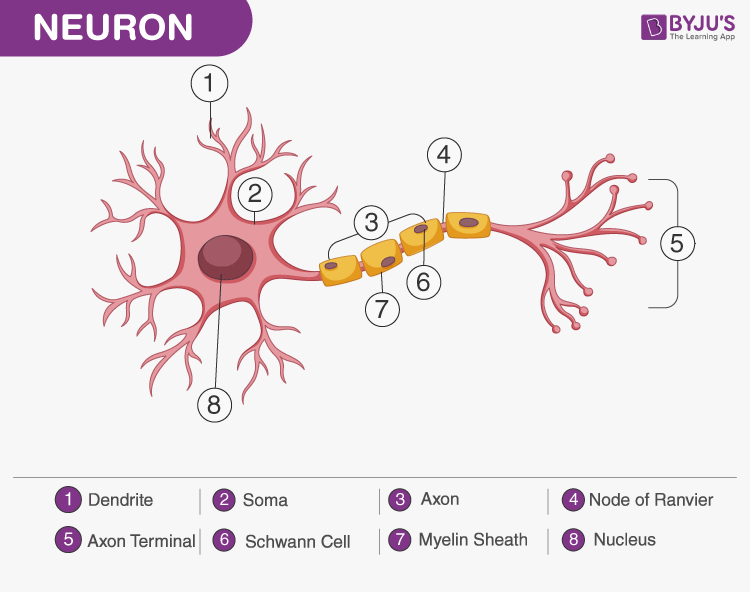
Neurons Generation Conduction And Transmission Of Nerve Impulse
A nerve impulse is the electric signals that pass along the dendrites to generate a nerve impulse or an action potential.

What happens during a nerve impulse. Each neuron receives an impulse and must pass it on to the next neuron and make sure the correct impulse continues on its path. The reversal of charge is called an action potential. Nerve and muscle fibers.
The axon tip ends at a synapse. Nerve impulses are mostly electrical signals along the dendrites to produce a nerve impulse or action potential. Specifically it involves potassium K and sodium Na ions.
As mentioned already there are different ions on either side of the cell membrane. Nerve impulse transmission through Synapse. The action potential travels rapidly down the neurons axon as an electric current.
The transmission of a nerve impulse along a neuron from one end to the other occurs as a result of electrical changes across the membrane of the neuron. Propagation of Impulses Speed of Impulses Neurones send messages electrochemically. Also Know what happens during a nerve impulse.
The exterior side has sodium ions that are positively charged and are more in number. The sodium-potassium pump maintains an electrical gradient across the plasma membrane of a neuron when it is not actively transmitting a nerve impulse. Through a chain of chemical events the dendrites part of a neuron pick up an impulse thats shuttled through the axon and transmitted to the next neuron.
Impulse continues on its path. Diffusion of Ca ion in the presynaptic knob causes movement of synaptic vesicle to the surface of the knob. This stimulus triggers the electrical and chemical changes in the neuron.
The signal causes gates in sodium ion channels to open allowing positive sodium ions to flow back into the cell. A nerve impulse is an electrical phenomenon that occurs because of a difference in electrical charge across the plasma membrane of a neuron. Myelin provides a form of insulation for nerves helping to keep the electrical impulses within the nerve fibre.
When nerve impulse reaches the pre-synaptic knob it depolarized the presynaptic membrane and causes the opening of voltage gated calcium channel. A nerve impulse is the way nerve cells communicate with one another. The membrane of an unstimulated neuron is polarizedthat is there is a difference in electrical charge between the outside and inside of the membrane.
The action potential is the result of ions moving in and out of the cell. It generates a change in potential gradient of voltage-gated channels across the membrane resulted from ionic movement in and out of the axolemma. Nerve impulses have a domino effect.
The speed of the nerve impulse is one of the things that can be detected by nerve conduction studies. A synapse is the junction between each axon tip and the next structure. A nerve impulse is a sudden reversal of the electrical charge across the membrane of a resting neuron.
A nerve impulse is generated when the stimulus is strong. This helps the spread of the impulse to the muscle fibre across a small gap called the synaptic cleft. If you stimulate a liver cell that reversal isnt going to occur.
This occurs only in excitable cells. The entire impulse passes through a neuron in about seven milliseconds faster than a lightning strike. This means that chemicals ions cause an electrical impulse.
The ions are moved in and out of the cell by potassium channels sodium channels and the sodium-potassium pump. A nerve impulse is an electrical phenomenon that occurs because of a difference in electrical charge across the plasma membrane of a neuron. What happens during the conduction of a nervous impulse.
Through a chain of chemical events the dendrites part of a neuron pick up an impulse thats shuttled through the axon and transmitted to the next neuron. I need to refer to the voltage-gated ion channels too. Heres what happens in just six easy steps.
An action potential is due to the movement of ions in and out of the cell. An action potential or nerve impulse is a transient short lasting reversal in the membrane potential that is conducted down the length of the fiber. It begins when the neuron receives a chemical signal from another cell.
It specifically involves sodium and potassium ions. Have new COVID-19 symptoms. Nerve impulse can define as a signal driven by either electrical chemical or mechanical stimulus onward the segment of an axon filament.
Transmission of Nerve Impulses. Conduction of Nerve Impulse. When a nerve impulse arrives at the motor end plate calcium ions enter the synaptic knob and a transmitter called acetylcholine is released.
A voltage change that reduces the ability of a neuron to conduct an impulse the membrane potential becomes more negative graded potential a local change in membrane potential in which current flow is quickly dissipated that is decremental. A nerve impulse travels along the neuron in the form of electrical and chemical signals. Nerve impulses begin in a dendrite move toward the cell body and then move down the axon.
What happens during a nerve impulse.

Transmission Of Nerve Impulses
Chapter 2 Nerve Cells And Nerve Impulses Ppt Video Online Download
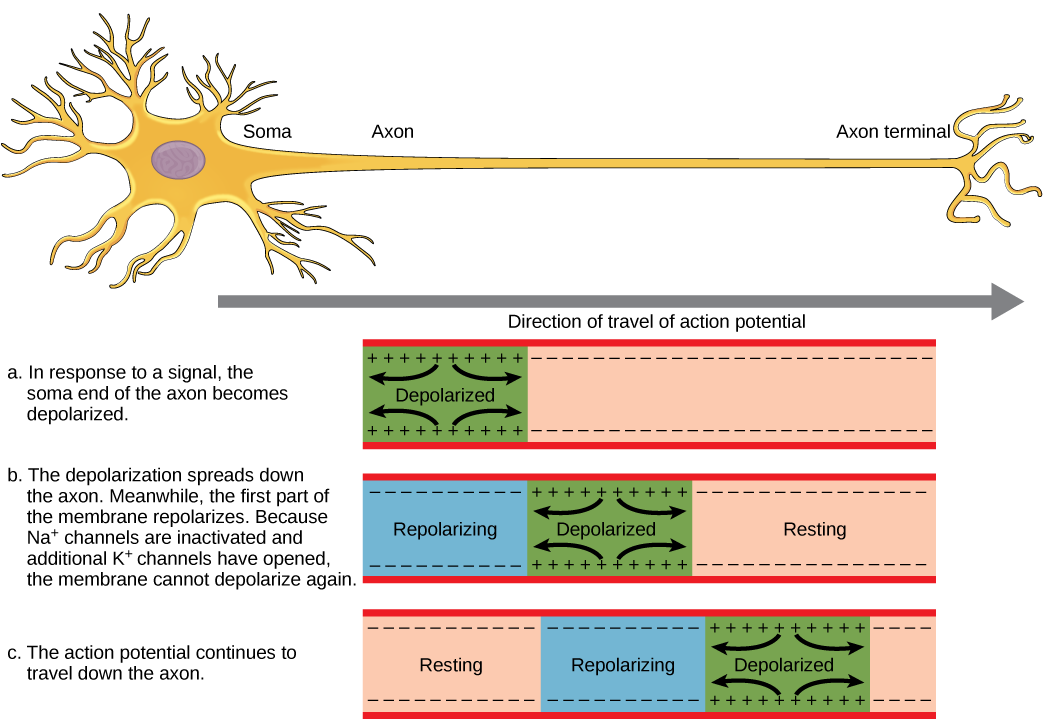
Nerve Impulse Definition Mechanism Process Types

Nerve Impulse Simple English Wikipedia The Free Encyclopedia

Chapter 2 Nerve Cells And Nerve Impulses Ppt Video Online Download