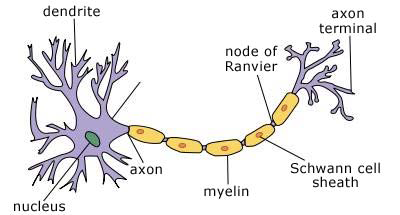
Nerve impulses are electrical impulses that travel along the axons of nerve cells neurons carrying various information. Receptor in the skin detects a stimulus the.
Cybersurgeons
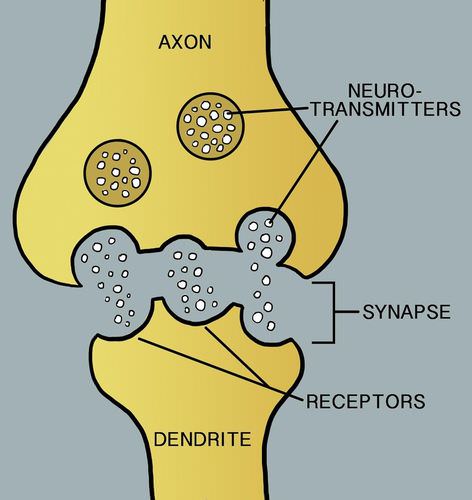
Neurotransmitters bind to the membrane of the dendrite.
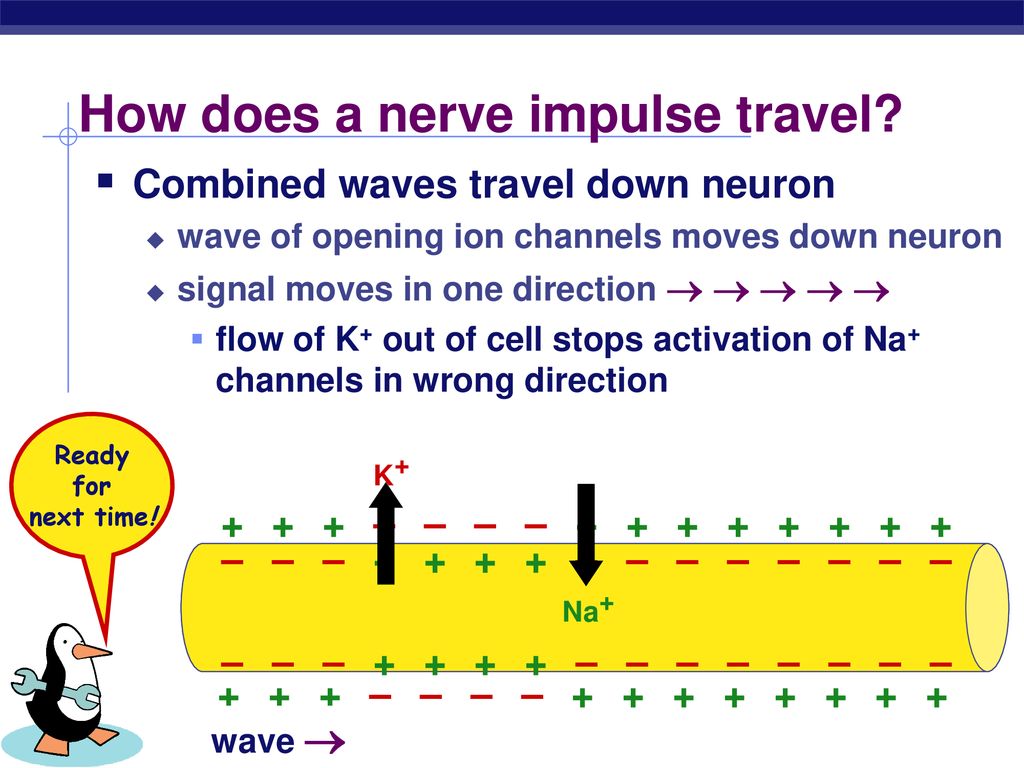
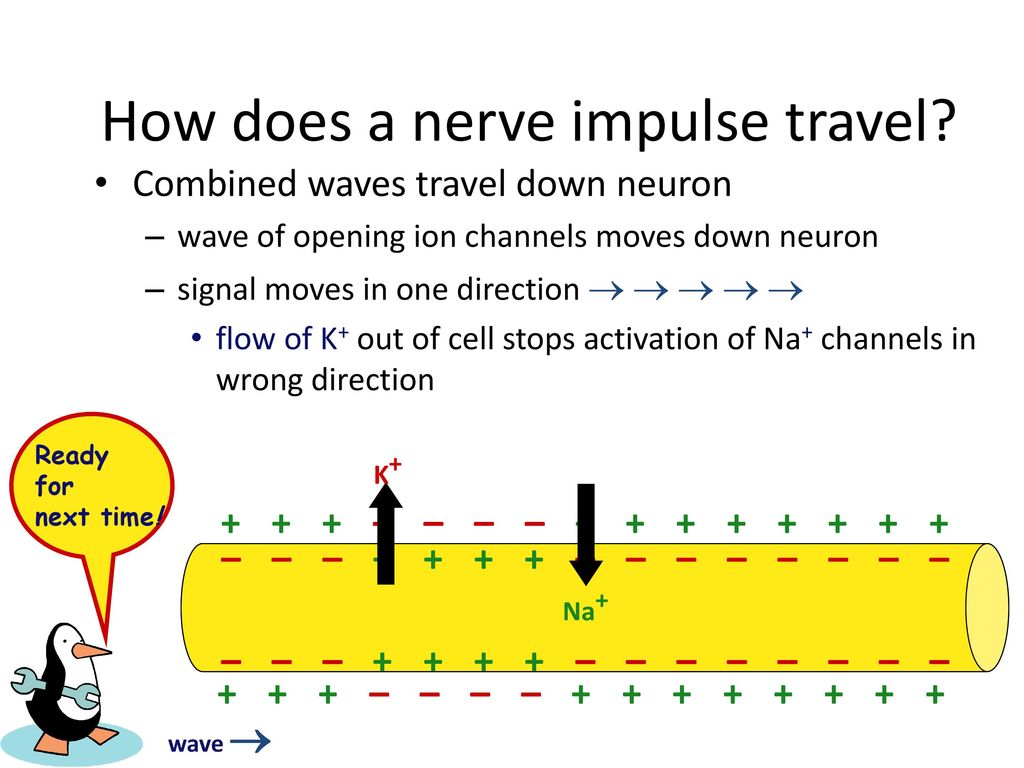
How does a nerve impulse travel. Action potentials can travel along axons at speeds of 01-100 ms. The sodium ions flow inside and potassium ions flow outside causing a reversal of charges. When the nerve impulse reaches the dendrites at the end of the axon chemical messengers called neurotransmitters are.
An action potential is due to the movement of ions in and out of the cell. A nervous impulse is transmitted across the synapse from a pre-synaptic neurone to a post-synaptic neurone through the use of neurotransmitter diffusion. The nerve pathway followed by a reflex action is called a reflex arc.
A nerve impulse is transmitted to another cell at either an electrical or a chemical synapse. A synapse that uses the neurotransmitter Acetylcholine. A nerve impulse is the electric signals that pass along the dendrites to generate a nerve impulse or an action potential.
Through a chain of chemical events the dendrites part of a neuron pick up an impulse thats shuttled through the axon and transmitted to the next neuron. When a nerve impulse reaches the end of an axon the axon releases chemicals called neurotransmitters. The arrival of the nerve impulse at the presynaptic terminal stimulates the release of neurotransmitter into the synaptic gap.
Chemical transmission of a nerve impulse at the synapse. It specifically involves sodium and potassium ions. The transmission of electrical energy along a nerve is typically measured in millivolts 30mV to 70 mV with times measured in milliseconds.
Some signals such as those for muscle position travel at speeds up to 119ms. These chemicals are called neurotransmitters and they can change the way nerves communicate with each other in the brain. The cell is now depolarised.
Nerve impulses have a domino effect. Speeds range from 10 to 100 meters per second. The binding of the neurotransmitter to receptors on the postsynaptic membrane stimulates the regeneration of the action potential in the postsynaptic neuron.
Along the neurons the signal propagates by an electrical impulse which travels along the axon. This depolarization results in an action potential which causes the nerve impulse to move along the length of the axon. At a chemical synapse neurotransmitter chemicals are released from the presynaptic cell into the synaptic cleft between cells.
Synapses An electrical nerve impulse travels along the first axon. Nerve Impulse Mechanism 3D Animation. Nerve impulses such as pain signals travel slower at 061ms.
The impulse travels through the cell body and is carried through the axon to the end brush a collection of fibers that extend off the axon. Each neuron receives an impulse and must pass it on to the next neuron and make sure the correct impulse continues on its path. The signal propagates across the synapse by chemical diffusion and causes the next neuron to fire and send the signal electrically down its axon.
The binding allows the nerve impulse to. For example a simple reflex arc happens if we accidentally touch something hot. Impulses are much slower than electrical currents in wires which travel at close to the speed of light 3x10 8 ms.
Nerve impulses are traveling electrochemical signals that change in charge as they travel along a nerve channel. The speed of a nerve impulse varies with the type of nerve impulse the nervous system is sending. These chemicals diffuse across the synapse the gap between the two neurons.
Nerve impulses travel directly across connected synapses via electricity while the impulses use special chemicals to cross non-touching synapses according to the Science Museum of the South Kensington Museum in London. The nerve impulse will travel down the length of the neuron to the end of the axon. When a nerve impulse is generated there is a change in the permeability of the cell membrane.
Familiar neurotransmitters include GABA serotonin and dopamine. To explain this in more detail lets take the example of a cholinergic synapse. The chemicals bind with receptor.
The axon from one neuron does not touch the next neuron forming a gap called a synapse. These signals travel from the brain to the spinal cord through the nerves to the organs tissues and muscles. When it reaches the axon it releases chemicals into the brain called neurotransmitters.
Neurotransmitters travel across the synapse between the axon and the dendrite of the next neuron. The chemicals travel across the cleft to the postsynaptic cell and bind to receptors embedded in its membrane. This means that nerve impulses can get from one part of a body to another in a few milliseconds which allows for fast responses to stimuli.
Propagation of electricity is possible due to differences in electrical potential between the inside of neuron and what is outside. Here the impulse triggers a release of chemicals that allow the impulse to travel through the synapse the space between the axon of one neuron and the dendrites of the next.
Nerve Impulse Read Biology Ck 12 Foundation
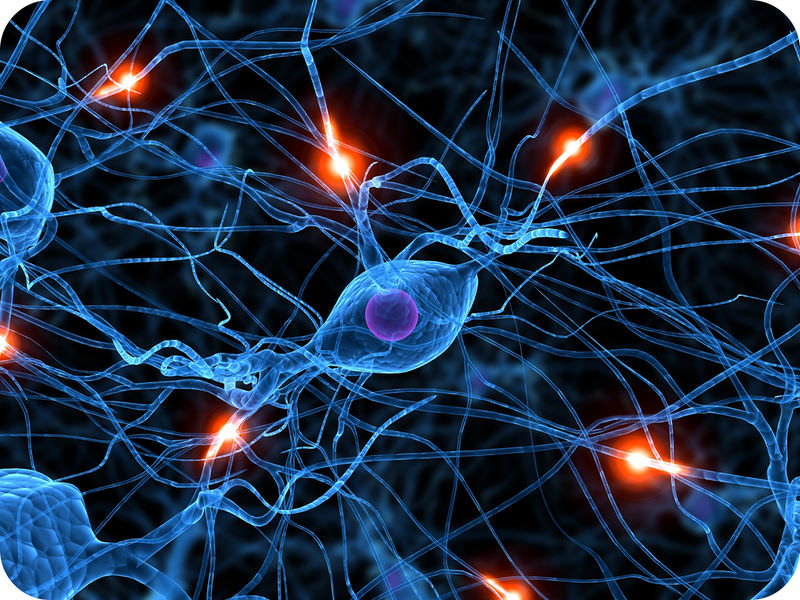
Nerve Impulses

Nerve Impulse Read Biology Ck 12 Foundation
Nervous System Every Time You Move A Muscle Every Time You Think A Thought Your Nerve Cells Are Hard At Work They Are Processing Information Receiving Ppt Download
How Nerve Cells Talk To Each Other Ppt Download